


Blog
Classic Salon 2026: How to Choose the Right Design, Size and Colors for Your Home

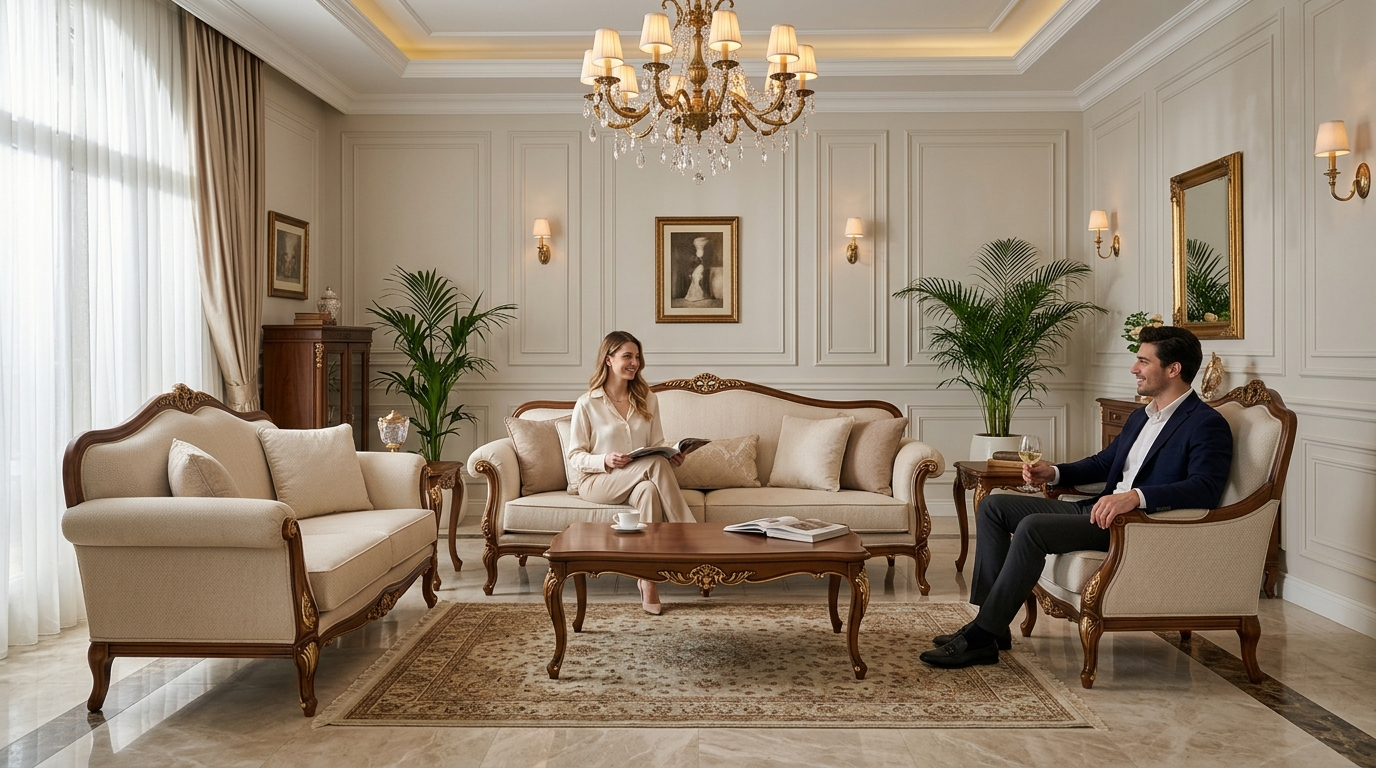
A classic salon remains one of the most recognizable furniture styles for homeowners who want to create an elegant and sophisticated reception space. Its appeal comes from its refined proportions, decorative details, rich upholstery, wood accents, and timeless character.
However, choosing a classic salon 2026 is no longer simply about selecting the most traditional or decorative furniture available. Modern homes require furniture that combines visual elegance with comfort, practical dimensions, and a design that works naturally with the rest of the interior.
This is where the selection process becomes more important.
A salon that looks impressive in a large showroom may feel oversized once placed inside a medium-sized room. Similarly, a dark upholstery color may look luxurious under showroom lighting but make a smaller room feel visually heavier. Even a beautiful classic design can become unsuitable if it blocks circulation or conflicts with the existing flooring, walls, curtains, or lighting.
For this reason, choosing the right classic salon should begin with the room itself.
Before selecting a specific model, homeowners should consider the room’s dimensions, how the space will be used, the number of people who will normally sit there, the amount of available circulation space, and the overall interior style.
Color is another important consideration. Neutral shades such as beige and cream can create a calm and flexible environment, while brown and deeper tones can introduce a stronger sense of traditional elegance. Warm gray can offer a more contemporary interpretation of classic furniture.
Materials and craftsmanship also deserve careful attention. The visual appearance of a salon is important, but the quality of its structure, upholstery, finishing, and details contributes significantly to the overall furniture experience.
Gheth Furniture combines elegant furniture aesthetics with attention to craftsmanship and quality-focused production, helping homeowners find furniture solutions that balance style and everyday practicality.
In this guide, we will explain how to choose a classic salon in 2026, from design and dimensions to colors, materials, furniture arrangement, and common purchasing mistakes.
What Defines a Classic Salon in 2026?
Classic furniture has changed considerably over time.
While traditional characteristics such as curved lines, decorative legs, wood details, elegant upholstery, and formal proportions remain important, contemporary classic furniture often uses these features more selectively.
The goal is not to fill every surface with decoration. Instead, the design can create a sophisticated appearance through carefully chosen details, balanced proportions, and quality materials.
Some of the defining characteristics of a classic salon 2026 include:
- Balanced furniture proportions.
- Refined decorative details.
- Versatile upholstery colors.
- Comfortable seating.
- Quality-focused finishing.
- A combination of traditional elegance and contemporary simplicity.
This makes classic furniture easier to integrate into modern homes, even when the rest of the interior is not completely traditional.
How to Choose the Right Classic Salon Design
The first step is to understand the room where the furniture will be placed.
Consider whether the space is mainly used for entertaining guests, family gatherings, or everyday seating. Also consider the amount of natural light, the location of doors and windows, and whether other furniture pieces need to be incorporated.
Ask yourself:
- How large is the room?
- How frequently will the salon be used?
- How many people need to be seated?
- How much natural light enters the room?
- What furniture is already present?
- Do you prefer traditional classic furniture or a modern-classic look?
These questions can help narrow down your options before you begin comparing individual models.
Classic Salons for Large Rooms
Large rooms offer more flexibility when planning a salon.
You can introduce several seating pieces and complementary furniture while still maintaining comfortable circulation.
However, a large room does not necessarily require oversized furniture. Proportion is more important than simply choosing the largest available set.
The arrangement should create a clear seating area while leaving enough open space around the furniture.
Classic Salons for Medium Rooms
Medium-sized rooms require more careful furniture selection.
A smaller number of well-proportioned seating pieces can often create a more sophisticated result than filling the room with too many items.
Make sure the arrangement leaves enough room to move between the seating area, doors, and other parts of the room.
Classic Salons for Small Rooms
Small rooms require careful attention to furniture depth and visual weight.
Large sofas and heavily decorated pieces can quickly make the space feel crowded.
A more compact classic design, combined with lighter upholstery and fewer pieces, can preserve the classic character without overwhelming the room.
How to Determine the Right Salon Size
Dimensions should be considered before choosing the final design.
Measure the length and width of the room, then identify doors, windows, entrances, air-conditioning units, and other permanent elements.
After that, determine the amount of space that can realistically be occupied by furniture.
Do not focus only on sofa length. Depth and height are equally important, especially in smaller rooms.
Leave Enough Space for Movement
A common furniture-planning mistake is using too much of the available floor space.
Even when the furniture technically fits, insufficient circulation can make the room uncomfortable.
Leave practical pathways around the seating area and make sure doors can open without interfering with the furniture.
Consider the Entrance and Delivery Path
Room measurements are not the only measurements that matter.
Before purchasing large furniture, consider the main entrance, hallways, stairs, elevators, and other access points.
A piece that fits inside the room may still be difficult to deliver if the route into the home is too narrow.
Choosing Classic Salon Colors
Color can completely change the character of a classic interior.
The right choice depends on the room’s dimensions, lighting, flooring, wall colors, and existing decorative elements.
Beige and Cream
Beige and cream are highly versatile choices for classic furniture.
They create a warm and sophisticated atmosphere while allowing greater flexibility when choosing curtains, rugs, walls, and accessories.
Brown and Wood Tones
Brown and warm wood tones create a stronger traditional character.
They can work particularly well with classic decorative elements, but darker shades should be balanced carefully in smaller spaces.
Warm Gray
Warm gray offers a contemporary alternative for homeowners who want classic furniture without creating an overly traditional interior.
It can be combined with wood details, neutral walls, and subtle decorative accessories.
Dark Colors
Dark upholstery can create a dramatic and luxurious appearance.
However, it works best when the room has enough space and lighting. In smaller rooms, dark furniture should be balanced with lighter surrounding elements.
How to Match the Salon Color with Your Interior
The salon color should be selected as part of the overall interior palette.
Look at the flooring, walls, curtains, rug, lighting, and existing furniture before making your choice.
If the room already contains several strong colors, neutral upholstery may create better balance. If the room is mostly neutral, the salon can become a stronger visual focal point.
Avoid introducing too many dominant colors. One main color supported by complementary shades usually creates a more cohesive interior.
Materials and Craftsmanship
The appearance of classic furniture is important, but materials and craftsmanship should not be overlooked.
Evaluate the structure, wood quality, upholstery, stitching, finishing, and decorative details.
Upholstery is particularly important because the salon is designed for sitting and socializing, not simply for decoration.
Comfort should therefore be evaluated alongside appearance.
A well-designed salon should provide appropriate seating support while maintaining the elegant character expected from classic furniture.
How Many Pieces Should a Classic Salon Include?
There is no universal number of pieces that works for every room.
The right number depends on the available space, the number of people who will use the salon, and the purpose of the room.
A large reception area may accommodate several seating pieces, while a smaller room may benefit from a simpler arrangement.
Instead of adding furniture simply to fill empty space, consider the purpose of every piece.
Does it provide useful seating? Does it contribute to the visual balance? Does it leave enough room for movement?
If not, the room may benefit from a simpler arrangement.
Choosing a Classic Salon Model
Once you have established the right dimensions, colors, and overall style, you can begin comparing specific models.
Do not rely only on photographs.
Compare the furniture dimensions, seating configuration, upholstery, wood details, decorative elements, and overall proportions.
One model you can include in your comparison is the COD03-0047 salon model, particularly if you are looking for a design with a distinctive classic character.
When comparing models, imagine how each one would look inside your actual room rather than focusing only on the showroom presentation.
Combining Classic Furniture with Modern Details
A home does not need to be entirely traditional to accommodate classic furniture.
Classic seating can be combined with modern lighting, simpler rugs, contemporary accessories, or cleaner wall treatments.
The key is balance.
If the furniture already contains prominent decorative details, surrounding it with simpler elements can prevent the room from looking visually overloaded.
This creates a modern-classic atmosphere that maintains elegance while feeling appropriate for a contemporary home.
Compare Different Models Before Buying
Choosing the first design you like is not always the best way to approach a furniture purchase.
After determining your requirements, compare several models according to dimensions, seating capacity, upholstery, color, and decorative details.
You can also compare the COD015-147 salon model with other options to understand how different proportions and design details affect the overall appearance.
The goal is not to find the most decorated model. It is to find the design that creates the best relationship between the furniture, the room, and your lifestyle.
Common Mistakes When Buying a Classic Salon
Buying Before Measuring
A beautiful design may still be unsuitable if its dimensions do not work with your room.
Always measure before making a decision.
Focusing Only on Appearance
A salon should look elegant, but it should also be comfortable and practical.
Choosing a Color Without Considering Lighting
Colors can look different under showroom lighting and natural home lighting.
Always consider how the upholstery will appear in the actual room.
Filling the Room with Too Many Pieces
More furniture does not automatically create more luxury.
A balanced arrangement often looks more sophisticated.
Ignoring Material Quality
The structure, upholstery, finishing, and craftsmanship can have a major impact on long-term use.
Forgetting the Existing Interior
The salon should complement the rest of the room rather than appear disconnected from it.
Choosing a Classic Salon for Your Lifestyle
Your lifestyle should influence your furniture selection.
If the salon is used every day, prioritize comfort, practical upholstery, durability, and easy maintenance.
If it is primarily used for guests and special occasions, you may place greater emphasis on formal appearance and decorative details.
Homes with children or frequent visitors may require additional attention to upholstery practicality and color selection.
Ultimately, the right salon is the one that works with the way your household actually uses the room.
Why Craftsmanship Matters in 2026
Furniture buyers increasingly look beyond the initial visual impression.
They want attractive designs, but they also expect quality materials, reliable construction, refined finishing, and attention to detail.
This makes choosing the right furniture brand an important part of the buying process.
Gheth Furniture focuses on combining sophisticated design with quality craftsmanship to create furniture solutions suited to homeowners who want elegance without overlooking practical requirements.
Explore Classic Salon Options
Once you understand your space and requirements, comparing different collections becomes much easier.
You can explore the Gheth Furniture salon collection to compare available designs and identify options that suit your preferred style, room dimensions, and interior direction.
Rather than choosing based solely on appearance, compare dimensions, colors, materials, seating arrangements, and decorative details before making the final decision.
Classic Salon Buying Checklist
Before purchasing your furniture, review the following:
- Measure the room.
- Identify doors and windows.
- Plan circulation space.
- Determine how many people need seating.
- Identify your preferred interior style.
- Compare multiple furniture models.
- Select a coordinated color palette.
- Evaluate materials and finishing.
- Consider comfort as well as appearance.
- Confirm that the final design suits your everyday needs.
Conclusion
Choosing a classic salon 2026 requires more than selecting an attractive furniture set.
The best result comes from balancing design, dimensions, colors, comfort, materials, craftsmanship, and the way the room will actually be used.
A successful classic interior should feel elegant without becoming crowded, luxurious without sacrificing comfort, and distinctive without appearing disconnected from the rest of the home.
The right choice will depend on your room size, preferred aesthetic, lighting, existing décor, and lifestyle.
If you are looking for classic furniture that combines refined design with quality-focused craftsmanship, explore the available options from Gheth Furniture and compare models according to your home’s dimensions, style, and practical needs.
Frequently Asked Questions
What is the best color for a classic salon in 2026?
Beige, cream, warm brown, and warm gray are versatile options for classic interiors. The right choice depends on the room’s lighting, walls, flooring, and existing décor.
How do I know what salon size will fit my room?
Measure the room’s length and width and account for doors, windows, and circulation areas. Then compare those measurements with the complete dimensions of the furniture.
Can I use a classic salon in a small room?
Yes. Choose furniture with appropriate proportions, lighter visual weight, and a limited number of pieces to maintain a sense of space.
Can classic furniture work with modern décor?
Yes. Classic seating can be paired with contemporary lighting, rugs, accessories, and neutral finishes to create a balanced modern-classic interior.
What should I look for in classic salon quality?
Pay attention to the structure, wood, upholstery, stitching, finishing, and decorative details. Overall craftsmanship is more important than focusing on a single material.
How many pieces should a classic salon include?
The number depends on the room’s size and purpose. Larger spaces can accommodate more seating, while smaller rooms generally benefit from fewer, better-proportioned pieces.
Are dark colors suitable for classic salons?
Yes, particularly in spacious and well-lit rooms. Smaller spaces may require lighter surrounding elements to balance darker furniture.
Should I choose my salon before the rest of the room décor?
The salon can serve as the main design element, but its color and style should be coordinated with the walls, flooring, curtains, lighting, and accessories.
How can I choose a comfortable classic salon?
Consider seat depth, back support, cushioning, height, and overall proportions. Comfort should be evaluated alongside the furniture’s appearance.
What is the most important step before buying a classic salon?
Start by measuring the room and identifying how it will be used. Then compare models based on dimensions, design, colors, materials, comfort, and craftsmanship.
